
Food As Medicine: The Power of Veterinary Nutritional Therapy
Food therapy is the 3rd branch of Traditional Chinese Veterinary medicine (TCVM). Food energetics play a significant role in maintaining health and treating illnesses. Just like humans, animals can benefit from a balanced and harmonious diet.
Food energetics describes how different foods influence the body’s internal balance, metabolism, and energy—not the temperature at which food is served. In Traditional Chinese Veterinary Medicine, all foods have inherent energetic qualities that fall along a spectrum of warming, neutral, or cooling, which affect digestion, organ function, and the balance of yin and yang.
Food therapy is a proactive, preventive approach to health — one that works with your pet’s body to support balance and resilience before illness takes hold. Perhaps most powerfully, it puts you in the driver’s seat. No more guessing which diet is right for your pet. With personalized guidance and education, every meal becomes an intentional act of care — one that supports your pet’s health, vitality, and longevity for years to come.
Unsure What The "Right" Diet Is For Your Pet?
Every pet is different, and nutrition should reflect that. Instead of generic recommendations, Dr. S creates personalized food therapy plans and recipes designed specifically for your pet—guided by both conventional diagnostics and Traditional Chinese Veterinary Medicine (TCVM) pattern assessment—to support balance, longevity, and overall wellness.
What Do You Get With A Comprehensive Nutritional Consultation?
You’re taking the guess work out!
- Review of current diet (commercial, fresh, raw or home cooked)
- Assessment of main concerns (weight, GI disease, inflammation, energy, skin disease/allergies, etc)
- Identification of dietary imbalances or red flags
- Guidance on warming/cooling foods, proteins to avoid, therapeutic food additions, supplements if appropriate
- PLUS 2 custom recipes, calorie calculations, and full nutrient balancing
- Best for patients at all life stages (young/healthy or old with chronic diseases) – Food therapy, when used prophylactically, is one of the best ways to prevent diseases or slow down current disease processes!
How is functional food therapy seen as medicine?
Chronic Diseases
Use “cooling” ingredients that target chronic inflammation like arthritis, diabetes, Cushing’s disease.
Nutrition: fish/rabbit/duck, barley, cucumbers/melons
Organ Support
Use “warming” ingredients that help with heat production. These animals are always cold and they love lying in the sunshine at all times or love being under blankets.
Nutrition: lamb/venison/chicken, oatmeal with cinnamon
Allergies
“Novel” protein commercial diets may not be ideal for every pet since it’s not a one size fits all treatment plan.
Nutrition: Turkey/rabbit/whitefish/clams, broccoli, celery, banana, flax seed oil
Lack Of Energy And Vitality
Use Qi tonic ingredients to add energy. Qi is the energy of life, which means old or weak dogs and cats need foods that will increase their Qi.
Nutrition: beef/chicken, squash, sweet potatoes, shitake mushrooms
Digestion/
Respiration
These diseases (asthma, pneumonia, mucoid diarrhea, bladder stones. etc.) are due to “Phlegm” or “Damp” in TCVM. Goal is to use ingredients that target phlegm and damp.
Nutrition: clams/pork/lamb, radishes, pears, apples, cucumbers, asparagus, peppermint
Growths/Tumors, Behavior, and Neurologic Disease
This is called Stagnation in TCVM. These are forms of stagnation in which blood and energy have become “stuck” causing tumors and behavioral issues.
Nutrition: crabs/lamb/shrimp, radishes, Golden Paste (organic ground turmeric, black pepper, Ceylon cinnamon, and coconut oil is a great supplement)
***The food suggestions provided here are intended for general educational purposes only and represent broad nutritional principles. They are not meant to replace individualized veterinary guidance or be used as treatment without professional supervision. Every pet’s medical needs are unique, and dietary recommendations should be tailored based on a comprehensive veterinary evaluation***
Frequently Asked Questions About Function Food Therapy
What to expect with food therapy?
Food therapy is a thoughtful, individualized process that uses nutrition as a foundational tool to support your pet’s health, comfort, and longevity. Rooted in Traditional Chinese Veterinary Medicine (TCVM) and informed by modern veterinary science, this approach considers the whole pet—body, mind, and lifestyle.
How does Dr S make a personalized nutritional assessment for my pet?
Your pet’s food therapy plan begins with a comprehensive review of their medical history, lifestyle, current diet, and overall health. From a TCVM perspective, this includes identifying energetic patterns and imbalances that influence digestion, inflammation, and vitality. Western diagnostics and recommendations are thoughtfully incorporated to ensure a balanced, integrative approach.
How are food therapy recipes different from recipes formulated by a boarded veterinary nutritionist?
Your pet’s specifically designed recipes will be formulated by Dr. Shah who is currently getting additional nutritional education, training, and certification to become a CVFT (certified veterinary food therapist) in order to be able to appropriately and correctly formulate nutritionally balanced diets and recipes for animals. However, it should be noted that boarded veterinary nutritionists have undergone far more training and education in nutrition than CVFTs; therefore, it is always recommended that you consult a boarded veterinary nutritionist first and foremost if interested in having a diet specifically formulated for your pet.
I have a busy schedule, and may not be able to feed my pet 100% cooked meals. Is that okay?
Customized, practical recommendations will be top priority! Based on your pet’s unique needs, you will receive tailored nutrition guidance that may include adjustments to commercial diets, home-prepared components, functional foods, or targeted supplements. Recommendations are designed to be realistic, sustainable, and aligned with your pet’s preferences and your daily routine.
Will there be different types of recipes that will be recommended as my pet ages?
Gradual, supportive change is key. Food therapy is not about drastic or overwhelming changes. Adjustments are made thoughtfully and often gradually, allowing your pet’s body to respond comfortably. As your pet’s needs evolve—whether due to age, season, or health status—nutrition plans are refined to maintain balance and support ongoing wellness.
What will be required of me as Dr. Shah establishes a food therapy plan for my pet?
Active partnership and education. You are an essential part of the process. Food therapy empowers you with knowledge and clarity around your pet’s nutrition, helping you feel confident and engaged in daily care. Ongoing communication and follow-up allow us to assess progress, address questions, and make adjustments as needed.
Is food therapy safe?
When performed by a veterinarian, food therapy can be used safely throughout your pet’s life. If needed, it can also be combined with conventional/Western medicine to help your pet get the best of both worlds medically.
Are results guaranteed with food therapy? If so, how soon can I expect improvement?
Integrative and holistic approaches often require more time, patience, and collaboration from everyone involved. These therapies are not designed as quick fixes, and immediate or overnight results are uncommon. Food therapy, in particular, works gradually by supporting the body at a foundational level—its value lies in the meaningful, long-term benefits it can provide over time.
Holistic medicine may support a wide range of concerns, including those affecting mobility, neurologic function, digestion, skin health, immunity, behavior, and internal organ systems. Its scope extends beyond treating isolated symptoms, aiming instead to address the whole animal.
In some cases, conditions may fully resolve; in others, particularly with chronic, advanced, or life-limiting disease, the focus shifts toward comfort, stability, and slowing progression. The primary goal in these situations is to preserve quality of life and support your pet’s well-being for as long as possible.
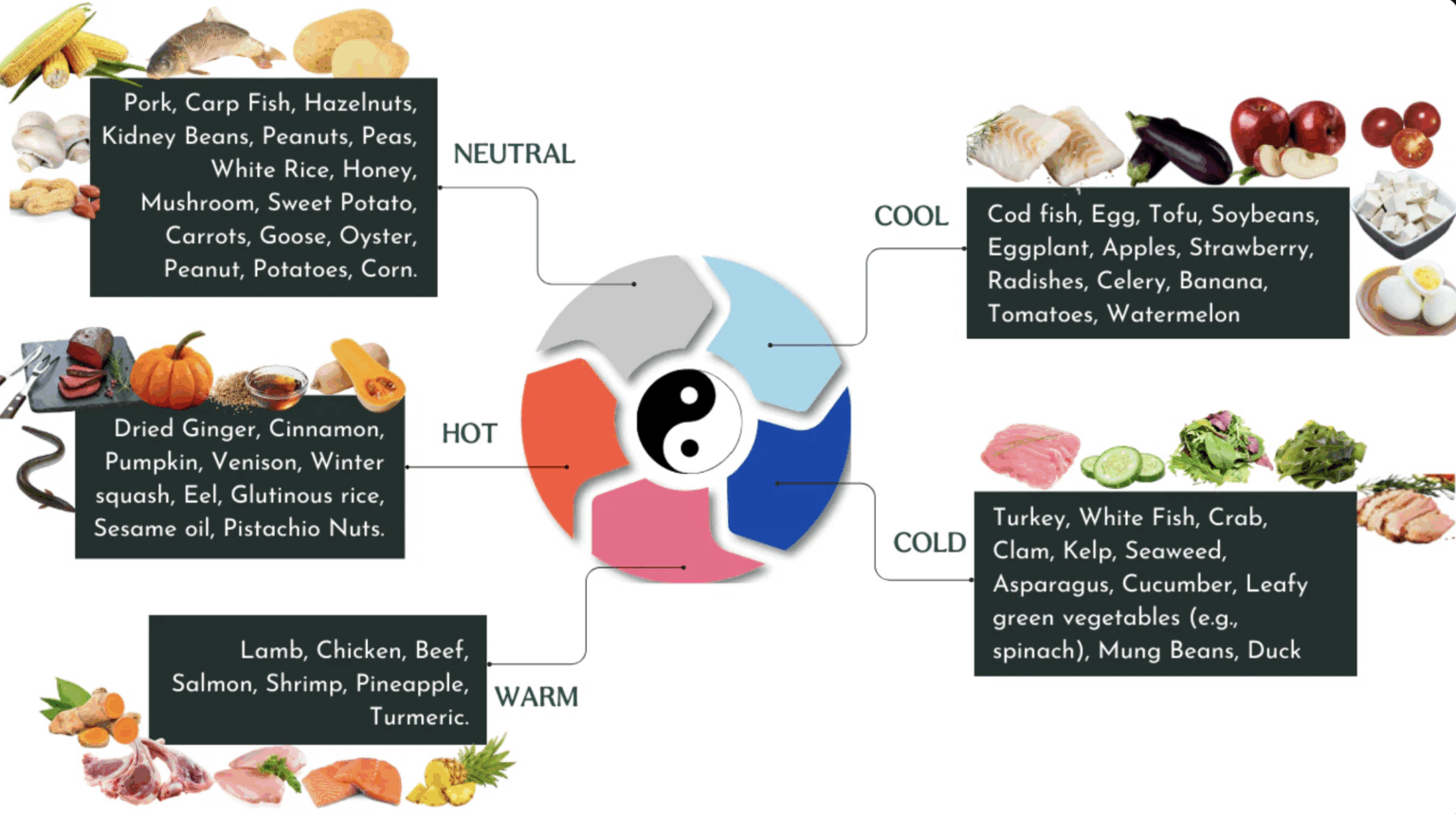
Food energetics is a concept rooted in traditional Chinese medicine (TCM) and other holistic health systems. In Traditional Chinese Medicine (TCM), the concepts of yin and yang play integral roles in understanding the relationship between food and human health. Food is regarded not just as sustenance but also as a form of medicine, capable of exerting various effects on the body.
Central to TCM dietary principles is the classification of foods based on their thermal properties, specifically whether they are considered cold, cool, warm, or hot. Here’s a basic breakdown of the energetic qualities of food:
- Hot: Foods that are energetically hot are believed to generate heat in the body and promote circulation. They are often spicy or pungent in flavor. Examples include chili peppers, garlic, ginger, and cinnamon.
- Warm: Warm foods have a milder heating effect on the body compared to hot foods. They help to promote digestion and circulation. Examples include onions, leeks, and most cooked grains.
- Plain: Food that is simple, minimally processed, and free from added flavors, seasonings, or sauces. It’s often considered neutral in terms of its energetic properties in traditional Chinese medicine (TCM) terminology.
- Cool: Cool foods have a cooling effect on the body and are often hydrating. They are beneficial for reducing inflammation and excess heat. Examples include cucumber, watermelon, spinach, and most fruits.
- Cold: Cold foods have a strong cooling effect and are often used to clear heat from the body. However, excessive consumption of cold foods may impair digestion and lead to imbalances in some individuals. Examples include ice cream, raw vegetables, and cold drinks.
The energetic properties of food are considered alongside an individual’s constitution, health condition, and environmental factors to determine an appropriate diet for promoting health and well-being. However, it’s essential to note that while food energetics can be a useful framework for understanding dietary effects, it’s not a substitute for evidence-based nutritional science.
Addressing Common Veterinary Diseases With Integrative Food Therapy
Musculoskeletal
- Arthritis
- Intervertebral disc disease (IVDD)
- Hind end weakness
- Ligament and tendon injury
Metabolic Support
- Kidney failure
- Diabetes
- Cushing’s disease
- Hyper/hypothyroidism
- Elevated liver enzymes
Respiratory
- Bronchitis
- Asthma
- Nasal congestion
- Pneumonia
- Rhinitis/Sinusitis
Behavioral
- Anxiety
- Cognitive dysfunction (senility)
- In some cases, aggression
Dermatologic
- Chronic skin disease
- Food or environmental allergies
- Skin infections
Immune Support/Oncology
Food therapy is not a cure for cancer. What it focuses on instead:
Supporting immune function
Reducing inflammation
Maintaining body condition and muscle mass
Supporting digestion and appetite
Enhancing comfort and energy
Helping pets tolerate conventional treatments more comfortably
Gastrointestinal
- Inflammatory Bowel Disease (IBD)
- Vomiting
- Diarrhea
- Constipation
- Pancreatitis
- Poor appetite
TAKE THE NEXT STEP
Book A Consultation
Let’s schedule a consultation to talk through your concerns, understand your pet’s unique needs, and create a thoughtful care plan together.