
Extending What You Do Best — Integrative Therapies That Complement Your Care
Lets Collaborate!
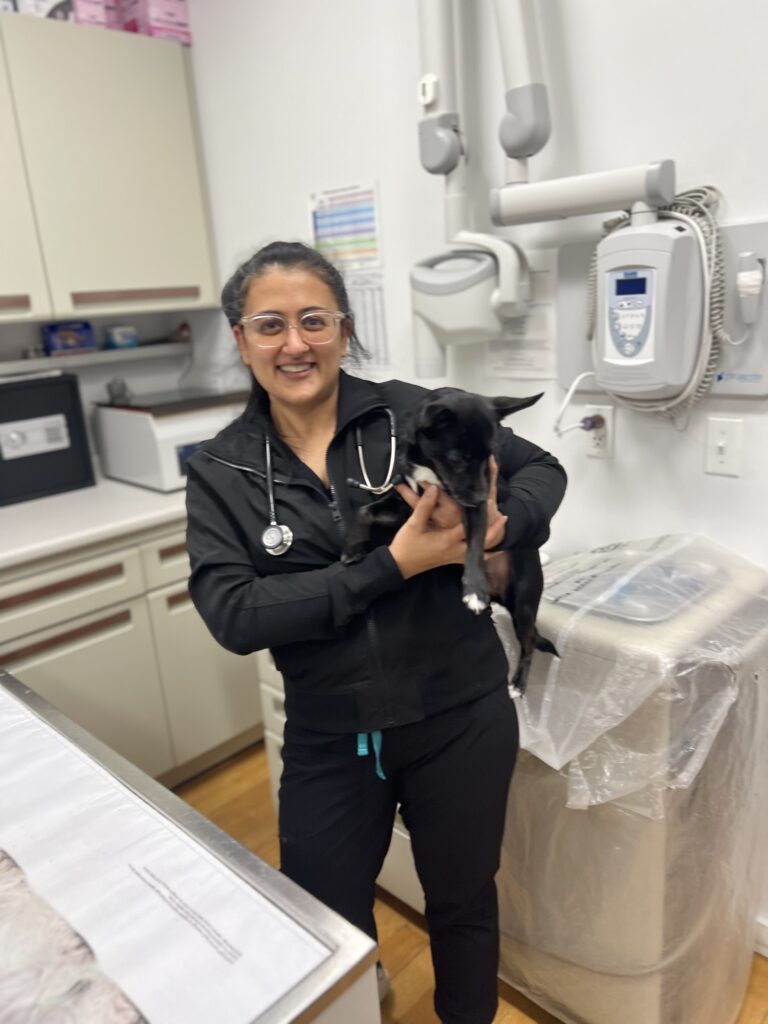
Hi, I’m Dr. Mika Sanghvi, an integrative veterinarian with a deep passion for what I do. My practice centers around therapies like acupuncture, photobiomodulation, and herbal medicine — tools that I believe make a real difference in the lives of our animal patients.
Since taking interest in integrative medicine, I’ve had the privilege of watching countless patients thrive and enjoy a significantly better quality of life. But here’s what I know to be true: those outcomes don’t happen in isolation. The foundation of every success story is the relationship between my work and the dedicated care of the primary veterinarian!
When we collaborate, we’re able to offer pet owners something truly comprehensive — an evidence-based approach that brings together the strengths of conventional and integrative medicine. That partnership is something I genuinely value and look forward to building.
Scientifically Grounded, Integrative Veterinary Care
My integrative services — acupuncture, photobiomodulation therapy (PBMT), and Traditional Chinese Veterinary Medicine (TCVM) herbal medicine — are evidence-informed modalities designed to work alongside the exceptional conventional care you already provide. Together, we can offer your patients a more complete, whole-body approach to healing.
Acupuncture & Electroacupuncture
Acupuncture is a neurophysiologically active intervention with well-documented mechanisms of action. Acupoint stimulation engages the nervous system at peripheral, spinal, and supraspinal levels — triggering release of endogenous opioids and key neurotransmitters while activating descending pain inhibitory pathways and suppressing pro-inflammatory mediators such as COX-2, IL-1β, and IL-6.
Analgesic response is frequency-dependent: low-frequency EA (2–10 Hz) preferentially drives endorphin and enkephalin release, while higher frequencies recruit dynorphin and serotonin for an additive effect. EA also induces beneficial neuroplasticity that may prevent or reverse central sensitization caused by chronic neuropathic pain.
Clinically, acupuncture supports patients with degenerative joint disease, post-operative pain, neurological conditions, and chronic musculoskeletal disease — and can help reduce dependence on NSAIDs, corticosteroids, and anticonvulsants in patients where long-term systemic medication poses a risk. It can also be used proactively in younger patients before chronic pain becomes established.
I offer both dry needling (DN) and electroacupuncture (EA), used independently or within a broader multimodal pain protocol.
Photobiomodulation Therapy (PBMT)
PBMT uses red and near-infrared light (600–1100 nm) to trigger beneficial cellular responses without thermal damage. Light energy is absorbed by chromophores — primarily cytochrome c oxidase in the mitochondrial electron transport chain — initiating a cascade that increases ATP production, reactive oxygen species (ROS), and nitric oxide, all of which support tissue repair and modulate inflammation.
Research has demonstrated three core clinical effects: pain reduction, modulation of the inflammatory response, and acceleration of tissue healing. PBMT has been shown to decrease PGE2 and COX-2 concentrations — sharing a therapeutic pathway with NSAIDs and corticosteroids — making it a valuable adjunct for patients who cannot tolerate systemic anti-inflammatory medications due to renal, hepatic, or gastrointestinal disease.
Clinically supported applications include post-surgical recovery (including TPLO), osteoarthritis, wound and soft tissue healing, lick granulomas, neurological conditions, and palliative pain management. PBMT works best as one component of a comprehensive, multimodal care plan.
Traditional Chinese Herbal Medicine
Chinese herbal formulas are prescribed based on each patient's individual TCVM diagnosis and are designed to complement — not replace — your conventional treatment plan. They provide ongoing therapeutic support between sessions and are particularly useful in chronic disease management, palliative care, and cases where long-term pharmaceutical use may not be ideal.
Research has shown that TCVM herbal formulations meaningfully reduce pro-inflammatory cytokines — including IL-1β and TNF-α — while upregulating antioxidant enzymes such as superoxide dismutase and glutathione peroxidase. Bioactive plant compounds including alkaloids, flavonoids, terpenoids, and polysaccharides contribute to these anti-inflammatory and immunomodulatory effects.
All herbal compounds I prescribe are sourced from suppliers that meet current Good Manufacturing Practice (cGMP) standards, ensuring verified purity, consistent composition, and safety for your patients.
"My goal is never to replace what you do — it's to add another layer of support for the patients you care deeply about. I welcome open communication and collaboration at every step."
— Dr. Mika Sanghvi, Integrative Veterinariantake the next step
Refer/Recommend a Patient
Have a patient who could benefit from integrative care? Just fill out the short referral form below, and I’ll take it from there — reaching out to the pet parent directly and keeping you in the loop with visit summaries after each appointment.
Questions? Want to Connect?
Connecting with fellow veterinarians is something I truly enjoy. Whether you have questions about my services, a specific case you’d like to talk through, or just want to learn more about how integrative medicine could support your patients — my door is always open.
Connect With Me
This form is specifically for vets who have questions for me